
Making Room to Grow: How Grass Valley Educators Built Lesson Labs Into the School Day

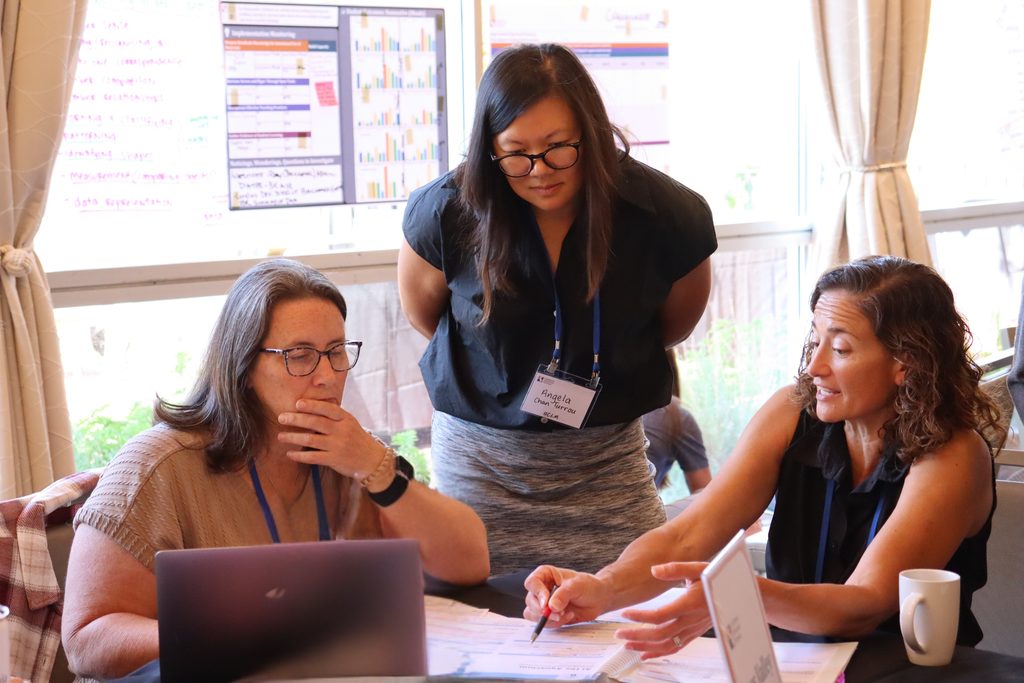
In many districts, improving instruction happens alone: after hours, behind a closed classroom door, with little chance to watch a colleague teach. That was the reality in Grass Valley School District, where educators had no opportunities within the school day to work together on instruction. The district’s Improvement Team decided to change that.
The team recognized that without shared time, teachers had few ways to see effective math teaching practices in action, learn from one another’s strengths, or understand how students’ grasp of big mathematical ideas develops from one grade level to the next. Professional growth depended on individual effort rather than a collective system.
So the team made a bold choice: they repurposed part of their own improvement meetings to create Lesson Labs, a structure where educators co-plan, co-teach, and debrief a lesson together. Each Lesson Lab centers on posing purposeful questions and implementing tasks that promote reasoning and problem solving. Every lab includes:
- A Three-Part Lesson: Teachers design a warm-up, an open task, and a student share-out and reflection together before anyone steps into the classroom.
- Shared Observation: Colleagues co-teach and observe, watching how students reason through the task in real time.
- A Structured Debrief: The team reflects on what they saw and heard, what went well, and what they want to change next time.
In one recent lab, 3rd and 4th grade teachers Jenn and Randy launched a dice task built around a single question: “How many?” Working in small teams at vertical workspaces, students moved from repeated addition and doubles toward “groups of” thinking, laying the groundwork for multiplication and, for 4th graders, factors and multiples.
Beyond any single lesson, Lesson Labs have built a true teaching community where educators support each other and build on one another’s teaching assets. Looking ahead, the team plans to expand Lesson Labs to new teachers at each school and to find opportunities within the math curriculum they are piloting to apply their effective teaching practices. What began as a slice of meeting time is becoming a lasting, districtwide habit of learning together.