
Districts Build Capacity for Ongoing Learning
A fundamental for achieving systems coherence and impact is building the capacity of teachers and administrators –not just through occasional learning opportunities but through regular, intentional “job-embedded” learning. What this looks like in action is districts prioritizing instructional leadership and coaching educators in common, evidence-based instructional practices. Ongoing learning within common evidence-based instructional practices is supported by high-quality, collaborative structures and assessed at the classroom, school, and district levels to ensure that student outcomes are improving.
California Education Partners (Ed Partners) doesn’t start by asking district partners to create new structures and systems to build staff capacity – we ask them to interrogate the effectiveness of their current system. In an asset approach, district staff reallocate and build on their foundational structures, such as staff meetings, professional learning communities (PLCs), grade-level meetings, and professional learning opportunities already embedded in their district calendars. We work with districts to leverage these established structures to deepen adult learning and collaboration, and to engage the people closest to the work in co-designing their learning.
Capacity Building in Context
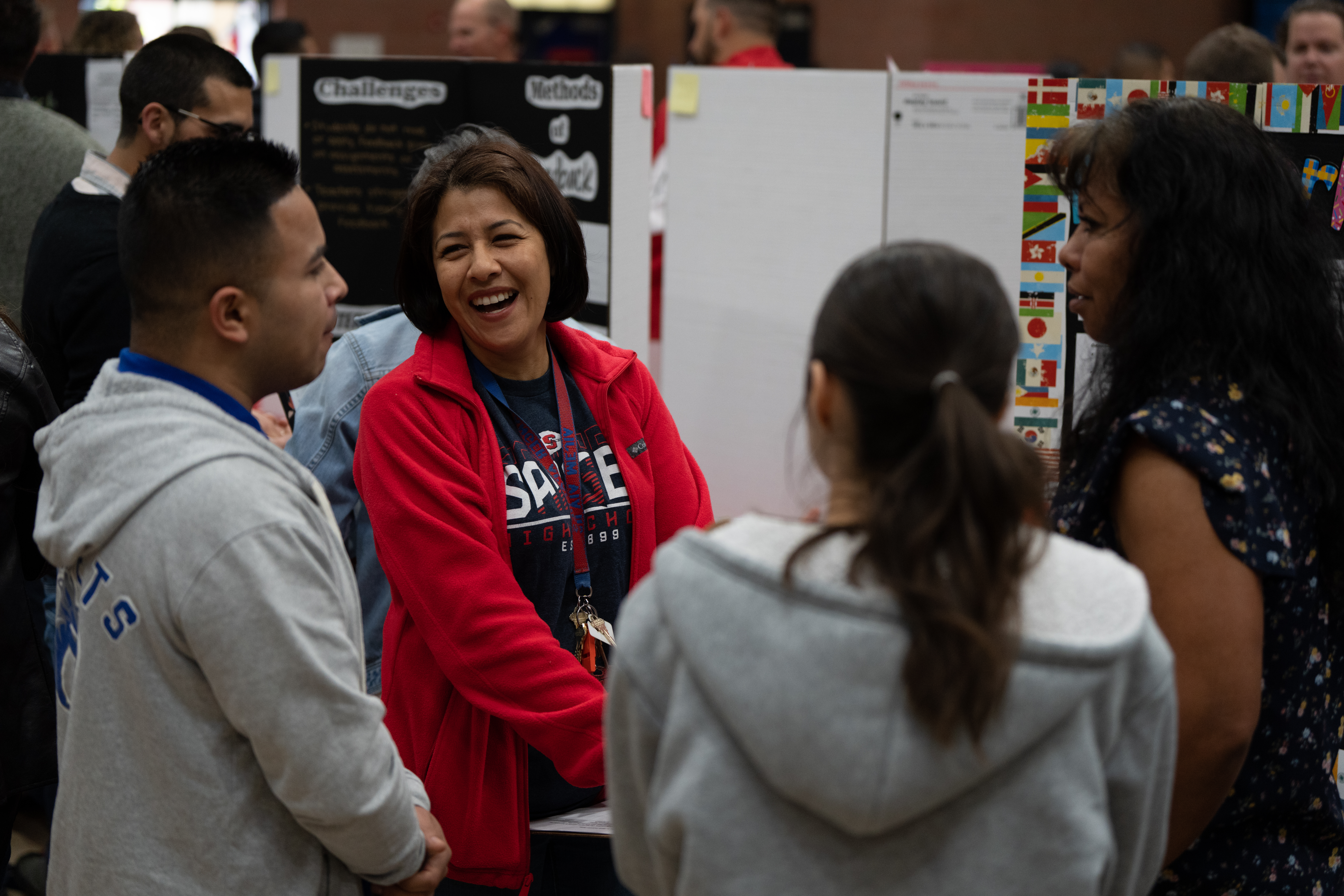
The ten-person Empire improvement team recently shared some of what they learned over their 2.5 years in an Ed Partners collaboration. They spoke about how they are seeing the value of teachers leading their peers’ professional learning. With their Program Manager’s support, the Empire team built agendas and slide decks together to teach other staff the effective practices they had learned and implemented during the collaboration. They practiced and refined facilitation as a team and led full-day professional learning and after-school collaborations. And, they continuously gathered teacher feedback to guide their next steps.
Empire talks about how this work helped them move away from isolated silos toward a culture of collective growth and a shared commitment to getting better together. They spoke about how the professional learning was responsive, relevant, and grounded in classroom practice when the focus was on teachers learning with and from one another. Most significantly, the instructional shifts they made as a result translated into greater learning for students.
Another school district, Morgan Hill, now midway through year two of a three-year collaboration, is taking the work to scale within its district by replicating the Ed Partners collaboration model. The District team members created their own launch and ongoing professional learning to engage their peers with the same types of learning they had experienced with Ed Partners.
For example, at a staff meeting, participants learned a hands-on activity as a ten-minute icebreaker that teachers could immediately put into practice in their classrooms the next day. The improvement team has learned that keeping the initial exposure low-stakes and fun helps them avoid overwhelming teachers and instead spark a genuine interest in bringing these techniques to their own classrooms. As their comfort level grows, they gradually expand these ten-minute icebreakers into thirty-minute collaborative sessions. In this way, the team demonstrates the value of their collaborative work through shared experiences and shows how to use their curriculum more intentionally to deepen student learning.
From Team to System
While each district has a unique context, there are many things that Morgan Hill, Empire, and others in our collaborations have in common, including strong support from the superintendent and their leadership teams to focus on instruction and learning. Districts that join an Ed Partners’ collaboration can count on Program Managers to work shoulder to shoulder with district leaders to build their capacity as well as that of their teachers.
As teams move through their work together in year one of the collaboration, building capacity can first look like broad exposure to concepts and then move to more concentrated learning of effective practices. By year two in the collaboration, there is an established rhythm for the work, and teams move to identifying the effective practices that everyone in the school site will do. By year three, successful teams are scaling beyond their focal schools and grade levels to reach their whole district.
Capacity building needs to be ongoing and vertical throughout a system to have a meaningful impact. The only way to achieve depth is to continue reviewing, revising, and understanding how something is actually being implemented. These capacity-building systems and structures, along with the other Ed Partners’ fundamentals of clear expectations, monitoring progress, and common, effective practices, have been shown to improve students’ outcomes and opportunities.