
Building Systems, Not Just Programs: How El Dorado is Reimagining County Office Support

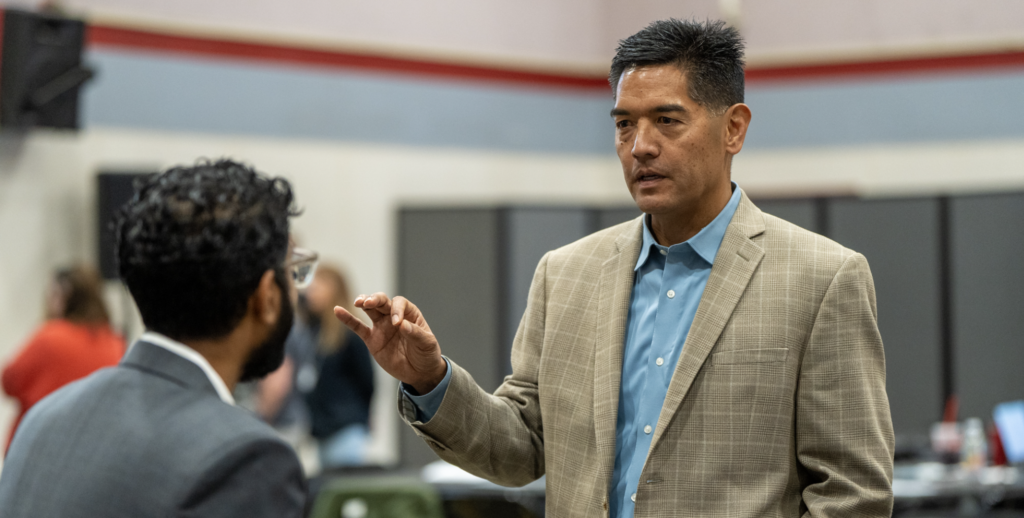
Superintendent Ed Manansala of the El Dorado County Office of Education (EDCOE), located east of Sacramento, is on a mission to build stronger, permanent systems for professional learning across 15 districts and 65 schools.
For rural districts, the challenges and opportunities are unique. When a district consists of small schools with one or two teachers per grade level in elementary and middle schools —and a principal who also serves as superintendent—isolation can be a real threat. In these settings, the County Office can be critical to a school district having a coherent system for instructional improvement.
A Five-Year Roadmap for Change
Now in the third year of a five-year partnership with California Education Partners (Ed Partners), EDCOE is leveraging Differentiated Assistance funds to move beyond “quick fixes.” Ed Manansala believes county offices need to come alongside and work with eligible districts in a way that addresses both immediate needs and long-term opportunities. In addition to addressing struggles in ELA or math, Manansala focuses on long-term sustainability.
The majority of El Dorado county’s districts opted into the work with EDCOE and Ed Partners, which has followed a clear, intentional arc:
- Foundation: Building community, establishing common instructional practices, and analyzing current systems for monitoring student progress.
- Application: Shifting toward the practical use of standards-aligned practices and refining data systems based on formative, actionable data.
- Systematization: Embedding high-leverage practices and robust monitoring systems across districts for long-term impact.
Building Capacity from the Inside Out
The County Office identified the people, processes, and structures necessary to sustain an ongoing impact on teaching and learning. County leaders saw a need to expand their personnel and support to administrators and teachers, so they restructured existing roles and hired for new positions to meet their goals of building capacity.
Last year, the county hired Implementation Support Partners (ISPs)—specialists who are doing the work alongside Ed Partners and who will carry the work forward after Ed Partners’ role ends. These ISPs are already training district staff on math “open tasks” and launching peer-to-peer learning systems. And there is a shift in the old model: instead of districts coming to the county office, more of EDCOE’s staff are going out to the districts.
Another promising development is how districts that share students are collaborating for the first time. EDCOE has four districts that feed into one high school and four that feed into another. Both of those high schools are a part of the El Dorado Union High School District. Through the EDCOE and Ed Partners collaboration, EDCOE built out what’s called the County Collaborative, a group of all seventh-, eighth-, and ninth-grade math teachers who meet regularly to align assessments, effective practices, and vertically collaborate.
Now that more capacity has been built, conversations are shifting toward how to monitor student outcomes, and the County Office plans to build a student monitoring data system to support teacher and administrator decision-making.
The Role of County Offices
As EDCOE enters its final two years of the partnership with Ed Partners, Superintendent Ed Manansala emphasized that these four factors will help sustain and grow this body of work:
1. Reimagine DA Funds: Use Differentiated Assistance dollars to fund universal, foundational supports that benefit all districts for the long term.
2. Partner for Sustainability: Use organizations like Ed Partners to develop the capacity of County Office staff alongside district staff.
3. Prioritize a Few High-Leverage Strategies: Focus deeply on a coherent system of effective practices, monitoring progress, clear standards, and building administrators’ and teachers’ capacity, rather than trying to do everything at once.
4. Embed Collaborative Systems: Build structures that can endure challenges and changes through collective ownership—from the classroom to the Superintendent’s office to the County Office.