
Meet Program Manager Christine Roberts
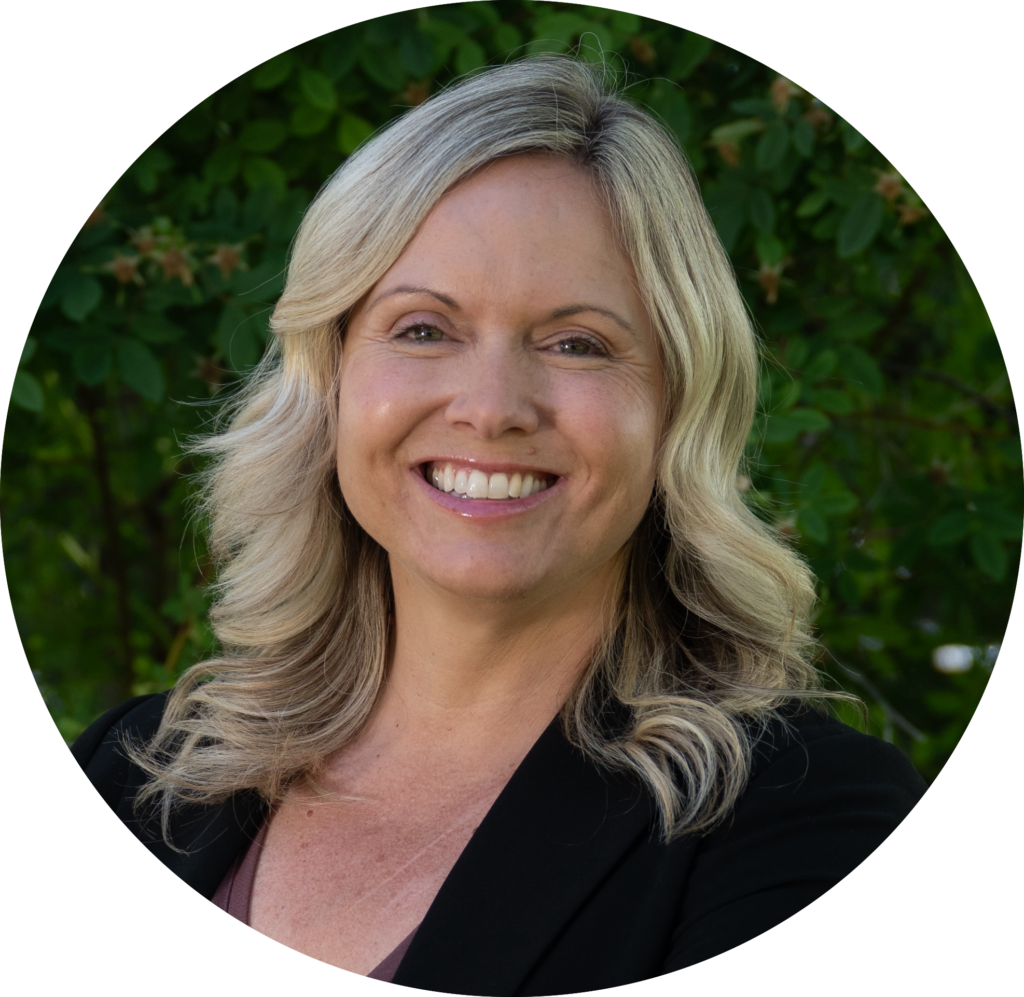
Q: What is something you do a lot in your job?
A: I spend a lot of my time connecting multiple levels of systems (from the classroom to the school to the district to state policy) to provide high-quality math learning experiences for all young people. Attending each of these levels and the relationships between them is how I support changes that are effective in their particular contexts. The payoff in this work is when I see district systems implementing changes to classroom practices, focusing more on mathematics at the classroom and district level, and building structures that prioritize and support the work.
Q: What is one thing you’ve learned from working with school districts as an Ed Partners’ Program Manager?
A: I’ve had the opportunity to see the evolution of Ed Partners’ approach going back more than a decade as a district participant in Math in Common to my current position as an Ed Partners Program Manager. One thing I’ve learned is that when we engage teachers, site and district administrators in learning together about high-quality math instruction and the system changes needed to support this work, they are able to thoughtfully lead, scale, and sustain their P3 efforts at their schools and district.
Q: What are you in the learning zone around right now?
A: The anecdotal evidence of the impact of our work is abundant. For me personally, and for the organization as a whole, an area of learning is how to collect various types of data (formative, summative, and implementation) to provide a full picture of the impact of our work.
Q: What is something you read recently that you would recommend?
A: I recently read the Center on Early Learning Success’ (CELS) State of the Field Research Brief on Early Math Instruction, which outlines a coherent, research-backed vision for mathematics instruction from preschool to Grade 3 (PK-3). The report emphasizes the need to focus on children’s robust mathematical ideas and explores the skilled pedagogical work of teachers to elicit, value, and build on children’s ideas toward interconnected understandings of mathematics. This research brief aligns well with our work and will be a wonderful resource to support our ongoing work with our district partners.